

Steel Bar Supplier for OEM Forging Operations
OEM forging shops need more than a catalog of grades. They need a steel bar supplier whose material performs predictably through the forging process, passes through heat treat without surprises, and arrives with the documentation their quality system requires. At Eaton Steel, we supply hot-rolled and cold-drawn steel bars to forging operations across the country, stocking the alloy and carbon steel grades that appear most frequently on OEM forging programs. As an ISO 9001:2015 certified steel bar supplier, every order ships with certifications and Mill Test Reports that support your downstream traceability requirements.
Request a Quote View Inventory Contact Us

What Forging Operations Need From a Bar Supplier
Bar stock is the starting point for every forged component, and material quality at that stage directly affects what comes out the other end of the forging cell and the heat treat furnace. Chemistry consistency from heat to heat, diameter tolerance tight enough to support accurate cut-to-length blanks, and a documented material trail from the mill to your dock are not secondary considerations in an OEM forging environment. They are the baseline requirements that separate a workable supplier relationship from one that creates production problems.
We supply steel bars to forging operations that range from high-volume automotive component forgings to lower-volume defense and industrial programs where material specifications are tightly controlled. Our inventory management process and ISO 9001:2015 quality system are structured to maintain grade and heat separation, verify certifications against received material, and ship with complete documentation on every order.
Steel Grades We Supply for Forging
The grade selection for a forging program depends on the mechanical properties required in the finished component, the heat treat cycle that will follow the forging operation, and any customer or specification-driven material requirements. We carry the grades that cover the widest range of OEM forging programs, from common commercial grades to aerospace and military specifications.
Alloy Steel Forging Grades
Alloy steels are the core of most structural and load-bearing OEM forging programs because their hardenability allows mechanical properties to be developed through controlled heat treatment after forging.
Alloy Steel 4140 is the most broadly used forging grade across commercial OEM programs. Its chrome-molybdenum chemistry delivers consistent hardenability in a wide range of section sizes, and it responds well to both normalizing and quench-and-temper cycles. It is commonly specified for automotive drivetrain components, agricultural equipment parts, and industrial hardware forgings. Alloy Steel 4340 carries higher alloy content than 4140, giving it better hardenability in larger cross-sections and higher toughness after heat treatment. For OEM forging programs producing heavily loaded structural components, connecting rods, or defense-program parts to AMS 6415, 4340 is the standard grade. Alloy Steel 4130 is a lower-carbon chrome-molybdenum grade with good forgeability and weldability, frequently used in aerospace and oil and gas forging programs where through-hardening requirements are more moderate. Alloy Steel 8620 is a case-hardening grade used when the forged component needs a hard, wear-resistant surface over a tough, impact-resistant core. Gears, shafts, and other cyclic-load components in automotive and industrial forging programs are the most common use cases. Alloy Steel 9310 shares the case-hardening approach of 8620 but carries higher nickel content, which improves core toughness and makes it a recurring choice for aerospace and defense OEM forging programs where low-temperature toughness is specified.
Carbon Steel Forging Grades
Carbon steels fill specific roles in OEM forging programs where the load requirements of the component do not require the higher alloy content of the 4100 or 8600 series grades.
Carbon Steel 1018 is a low-carbon grade with excellent forgeability and good case-hardening response. It is used in OEM forging programs for lower-stress components where machinability and surface-finishing after forging are important considerations. Carbon Steel 1045 is a medium-carbon grade that develops meaningful hardness and strength after quench and temper, making it a practical choice for OEM forging programs producing agricultural components, hand tools, and industrial hardware where through-hardening is needed but full alloy steel hardenability is not required. We also supply a range of standard carbon steel grades including A36 and 1060 to support the full breadth of carbon steel forging programs our customers run.
Aerospace and Military Specification Grades
OEM forging programs serving defense primes or aerospace supply chains frequently require material to named specifications rather than standard commercial grade designations. We supply steel bar to AMS 6415, which covers 4340 alloy steel bar to premium aircraft quality cleanliness and mechanical property requirements used across aerospace and defense forging programs. We also supply to AMS 2300 for programs requiring premium inclusion content standards, and to Mil-S-5000 for ordnance and small arms forging programs that reference the military specification. Material supplied to these documents ships with the certifications and test data those specifications require.
Hot Rolled Bar for Forging Programs
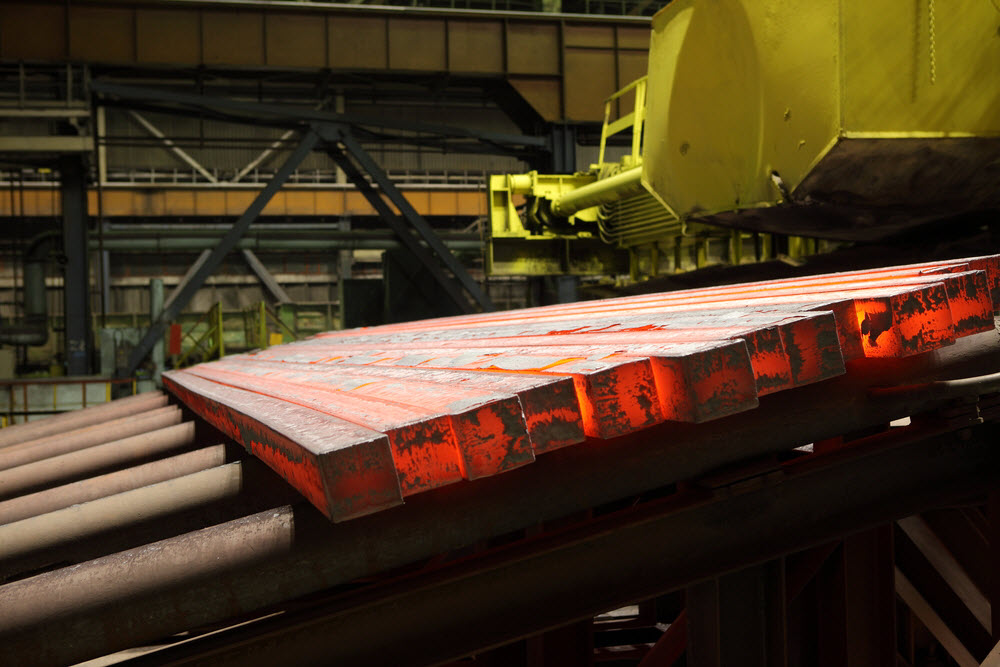
Hot rolled steel bar is the standard starting form for most open die and closed die forging operations because the as-rolled condition provides enough ductility and workability for the forging process while keeping material cost lower than cold drawn or turned and polished bar.
We supply hot-rolled steel bar in round, hexagonal, and square profiles from 1/4 inch to 9 inches in diameter across our alloy and carbon steel grade range. For OEM forging programs that cut bar stock into blanks before forging, consistent diameter tolerance from bar to bar reduces scrap rates at the cut-to-length station. For programs where surface condition of the blank matters to the forging die or to the post-forge inspection process, we can discuss grade and processing options that address your specific requirements.
Do you need Cold Finished or Hot Rolled Bars?


Industries We Supply Steel Bar For OEM Forging
Forged steel components appear in nearly every industrial sector, and the steel bar that feeds those programs comes from a range of grade and specification requirements that we cover across our inventory.
- Automotive and light truck OEM forging programs consume large volumes of alloy steel bar, particularly 4140 and 8620, for drivetrain components, suspension parts, and fasteners. Consistent chemistry and tight dimensional tolerance are particularly important in high-volume automotive forging programs where any bar-to-bar variability affects press loads and finished part geometry.
- Agricultural equipment OEM forging programs use a mix of alloy and carbon steel grades for tillage components, driveline parts, and structural hardware. These programs often operate across a wider range of section sizes than automotive work, and we supply the bar diameter range to cover them.
- Defense and government contract forging programs require material to specific military or aerospace specifications and demand complete documentation from mill to ship. Our ability to supply AMS and Mil-spec certified bar with full Mill Test Reports makes us a practical sourcing option for defense OEM forging suppliers at any tier.
- Construction equipment and industrial OEM forging programs use heavier section alloy steel bars for ground-engaging components, lifting hardware, and structural forgings that require through-hardening in large cross-sections. Grades like 4340 and 4130 cover the hardenability requirements those programs typically call out.
Certifications and Documentation
Every steel bar we ship includes certifications and Mill Test Reports documenting the material chemistry, mechanical properties, heat number, and processing history. For firearm manufacturers working under an ISO-certified quality management system, supplying a Tier 1 customer, or building firearms to a government specification, this documentation is the record that closes the traceability loop from raw material to finished part.
Our ISO 9001:2015 certification covers the full order process, including how material is received, inspected against certification documents, stored by grade and heat, and shipped to the customer. That certification gives our customers a third-party validated process behind every order, not just a promise.
Get Started With Eaton Steel Today
Contact Eaton Steel to discuss your OEM forging program steel bar requirements. Whether you are sourcing a standard commercial grade, need material to an AMS or Mil-spec, or are working through grade selection for a new forging program, our team can help you identify the right bar form, diameter, and certification package. Request a quote today!

