

Automotive Grade Steel Bar Supplier
Automotive manufacturers and their tier suppliers operate in one of the most demanding supply chain environments in manufacturing. Material quality, volume capability, dimensional consistency, and on-time delivery all have to hold across programs that run millions of parts. Eaton Steel has supplied hot-rolled and cold-drawn steel bars to the automotive industry from our home in the Detroit metro for more than six decades. We supply the carbon steel grades that automotive programs call for most frequently, in the volumes and cut lengths our customers need, backed by ISO 9001:2015 certified processes and full material certifications on every order.
Request a Quote View Inventory Contact Us

Why Detroit Automotive Suppliers Choose Eaton Steel
Proximity to the automotive industry is not just a geographic fact for us. It is the reason our inventory, our processing capabilities, and our service model are built around what automotive programs actually require. Tier suppliers in the Detroit market need a steel bar supplier who understands high-volume blanking requirements, who stocks the grades their programs call for, and who can deliver consistently without creating scheduling problems on the plant floor.
Our state-of-the-art bar and tube cutting facility allows us to deliver pre-cut blanks directly to your first operation, eliminating the blanking step from your production process. For high-volume automotive programs where labor and machine time at the first operation represents a real cost, receiving cut-to-length bar stock rather than full-length bars translates directly to savings on the floor.
Steel Grades We Supply for Automotive Programs
Automotive steel bar programs run across a range of carbon steel grades depending on the component being produced, the machining process, and the mechanical properties required after any heat treatment. We stock the grades that appear most consistently across automotive tier supplier programs, in both hot-rolled and cold-drawn processing.
Low Carbon Grades for High-Volume Machining
Carbon Steel 1018 is one of the most widely used grades in automotive tier manufacturing. It is a low-carbon steel with excellent cold drawing response, tight dimensional tolerance in cold drawn condition, and predictable machinability on both high-speed and CNC turning equipment. For automotive fasteners, brackets, pins, and small structural components that need to be produced at high volume with consistent surface finish and dimensional accuracy, 1018 cold-drawn bar is the standard starting material. We supply 1018 in both hot-rolled and cold-drawn forms across round, hex, and square profiles.
Carbon Steel 1020 carries slightly higher carbon content than 1018, which gives it a modest increase in tensile strength while retaining the machinability and case-hardening response that automotive component manufacturers rely on. It is frequently specified for engine components and transmission parts where the additional strength over 1018 is needed without the higher carbon content of the 1030 or 1045 grades.
Carbon Steel 1117 is a free-machining grade that contains higher sulfur than standard 1018 or 1020, which significantly improves chip formation and surface finish at high cutting speeds. For automotive programs running high-volume screw machine or turning operations on fasteners, fuel injection components, and similar small-diameter parts, 1117 steel bar reduces cycle time and tool wear compared to standard low-carbon grades.
Medium Carbon Grades for Strength-Critical Components
Carbon Steel 1030 bridges the gap between the low-carbon grades and the higher-strength 1045. Its carbon content puts it in a range where mechanical properties can be developed through heat treatment when needed, while still supporting machining operations on automotive components that require more strength than 1018 or 1020 can deliver in the annealed condition.
Carbon Steel 1045 is the most common medium-carbon grade in automotive steel bar programs. After quench and temper heat treatment, 1045 develops the tensile strength, hardness, and wear resistance that axle shafts, driveline components, and wheel and hub components require in service. Its heat treat response is predictable and well established in automotive manufacturing processes, which makes it a practical grade for any program where the finished component needs to meet mechanical property minimums after heat treat. We supply 1045 in both hot rolled and cold drawn bar, and both forms are in regular use across automotive tier programs.
Carbon Steel 1060 is a higher-carbon grade used in automotive programs where wear resistance and hardness after heat treatment take priority. Spring components, wheel components, and wear parts where surface hardness is the primary requirement are the most common use cases for 1060 steel bar in automotive programs.
Processing: Hot Rolled vs. Cold Drawn for Automotive Programs
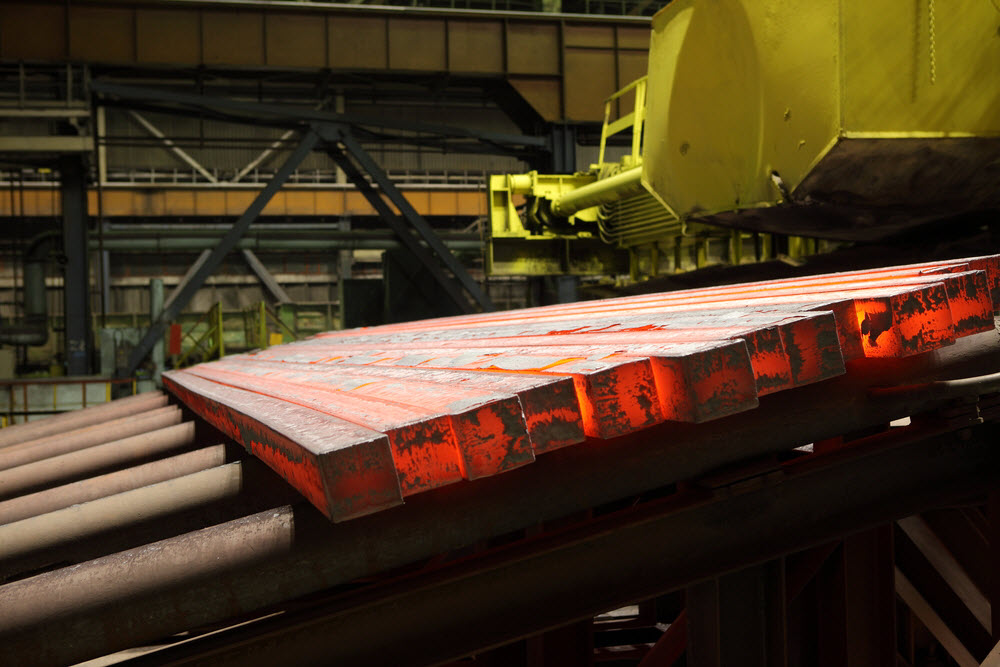
Hot-rolled steel bar is produced at elevated temperature and carries a scaled surface with dimensional tolerances that reflect the rolling process. For automotive parts that will have significant stock removed in machining, hot-rolled bar is the cost-effective starting form. Cold-drawn bar is pulled through a die after hot rolling, which eliminates scale, tightens dimensional tolerance, and increases yield strength through work hardening. For high-volume automotive turning and screw machine programs where bar diameter is close to the finished part dimension and surface finish of the blank affects tool life, cold-drawn bar is the correct starting material. We supply both forms across our full automotive-grade range and can discuss the right option for your specific program and production process.
Automotive Components We Supply Steel Bar For
The steel bar we supply feeds production of the principal load-bearing, wear-critical, and precision-machined components throughout the powertrain, chassis, and safety systems of a vehicle.
- Transmission components and engine components represent two of the highest-volume steel bar-consuming categories in automotive manufacturing. Both demand consistent chemistry and tight dimensional control from bar to bar because any variation affects machining results and finished component tolerances in assemblies that have zero margin for loose geometry.
- Axle and driveline components carry the full torque and bending loads of a vehicle's powertrain to the wheels. 1045 hot-rolled bar is the standard starting material for many of these components because of its predictable heat treat response and the strength it develops after quench and temper.
- Fasteners are one of the highest-volume steel bar programs in automotive manufacturing. Low-carbon and free-machining grades, including 1018 and 1117, are the standard choices for fastener blanks, where machinability, cold heading response, and dimensional consistency across millions of pieces are the primary material requirements.
- Fuel injection components, airbag components, and steering components are precision-machined parts where surface finish, dimensional tolerance, and material cleanliness affect both the machining process and the performance of the finished assembly. Cold-drawn bar in the appropriate grade provides the surface and dimensional conditions these programs require.
- Wheel and hub components, brackets, and other structural automotive parts cover a range of grades and section sizes. Our inventory and cutting capability allow us to supply these programs in the volume and form they require, whether that is full-length bar or cut-to-length blanks ready for the first machining operation.
Do you need Cold Finished or Hot Rolled Bars?


Bar and Tube Cutting: Saving Your First Operation
Our bar and tube cutting facility is one of the most direct ways we add value to automotive tier suppliers beyond simply supplying raw bar stock. When we deliver pre-cut blanks to your specified length, your receiving department hands the material directly to production rather than to a saw or shear station. For programs running millions of cut pieces per year, that single step removed from your process represents real savings in machine time, labor, and floor space.
We cut bar stock to customer-specified lengths across our full grade and diameter range, and we hold the tolerance required to eliminate rework or additional cutting at your facility. If your program currently blanks in-house from full-length bar, contact us to discuss whether receiving cut-to-length stock from us is cost-effective for your volume and part geometry.
Certifications and Volume Capability
Every steel bar we ship includes certifications and Mill Test Reports documenting heat chemistry, mechanical test results, heat number, and processing history. For automotive tier suppliers maintaining a quality management system or supplying a customer with first article or PPAP documentation requirements, those records provide the material traceability your quality team needs.
Our ISO 9001:2015 certification covers the full order process from material receipt and incoming inspection through storage and shipment. The minimum order quantity for our automotive programs is 10,000 lbs, which aligns with the volume requirements of production automotive programs rather than spot purchase quantities.
Get Started With Eaton Steel Today
Contact Eaton Steel to discuss your OEM forging program steel bar requirements. Whether you are sourcing a standard commercial grade, need material to an AMS or Mil-spec, or are working through grade selection for a new forging program, our team can help you identify the right bar form, diameter, and certification package. Request a quote today!

